62.015 Delplanqueia dilutella (Western Thyme Knot-horn)
ws: 18-23mm; Jul-Aug; wild thyme (Thymus polytrichus) and associated with yellow ants (Lasius flavus); local on limestone cliffs and grassy slopes on coasts throughout GB.
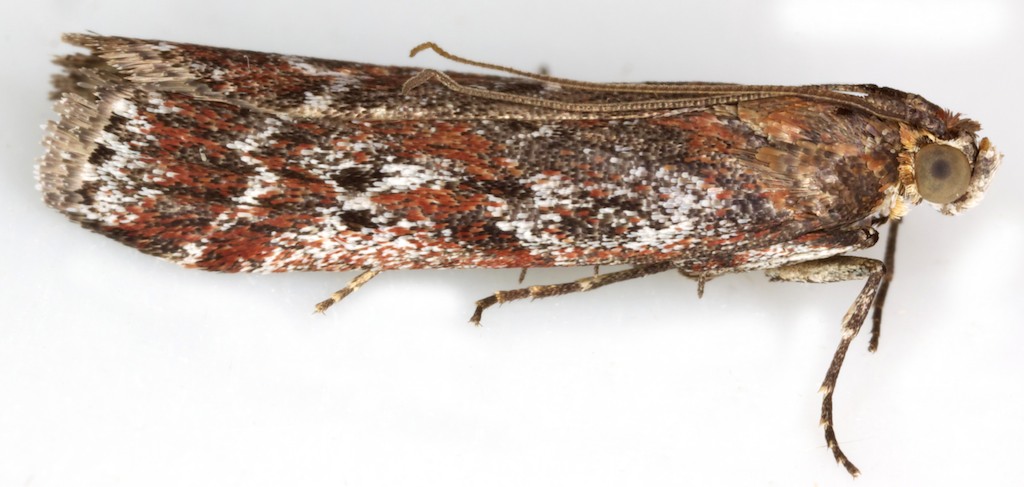
Delplanqueia dilutella §1 male
ID: Goater suggests this species is easy to identify "on account of the narrow reddish forewing with conspicuous pale second line". Pempeliela ornatella can be similar, but is larger (ws 23-27mm), less red, has an ochreous streak towards the dorsum and a straighter more oblique second line.
D.inscriptella has recently been split from D.dilutella. According to Norfolk Moths, it has a brown (rather than grey) ground colour and lacks the white subbasal fascia shown by D.dilutella. Apparently most Norfolk and Dorset individuals are now thought to be D.inscriptella. Genital images are shown at Moth Dissection.
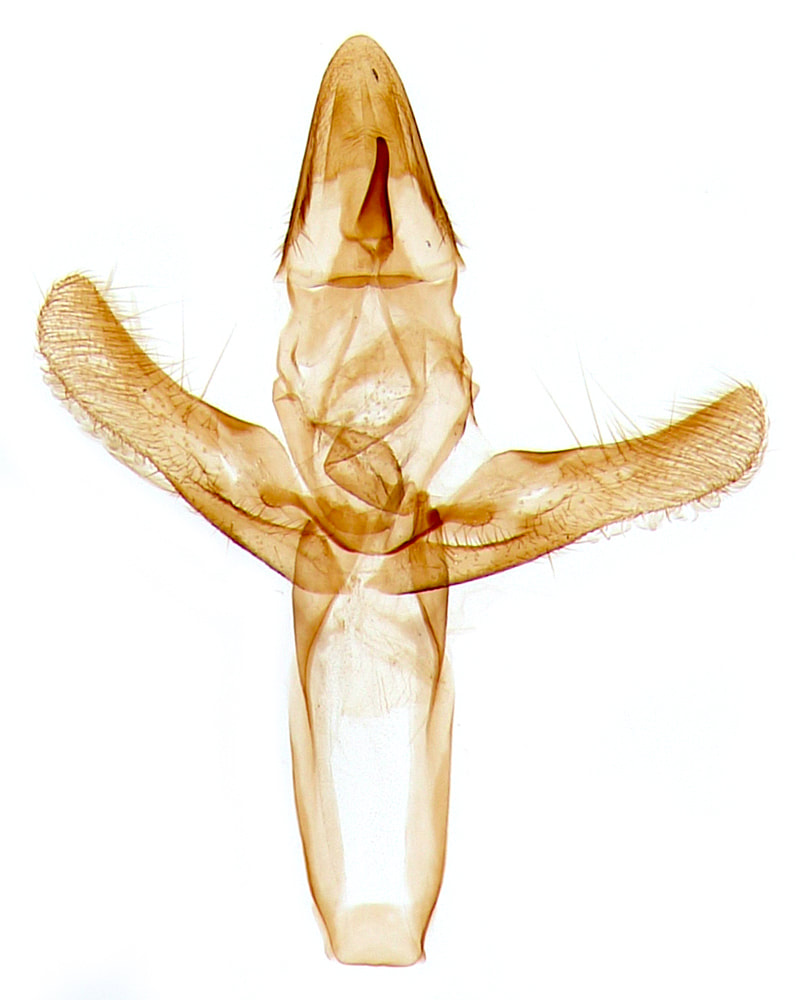
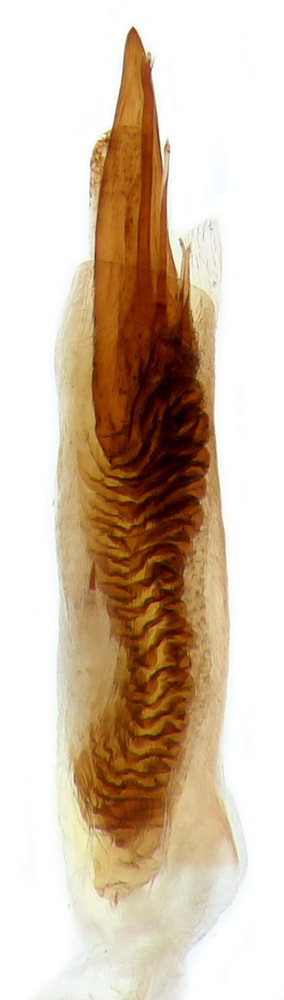
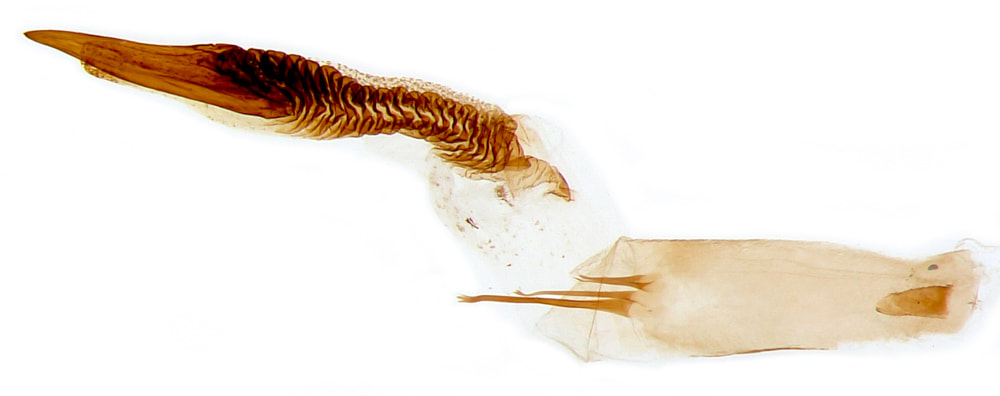
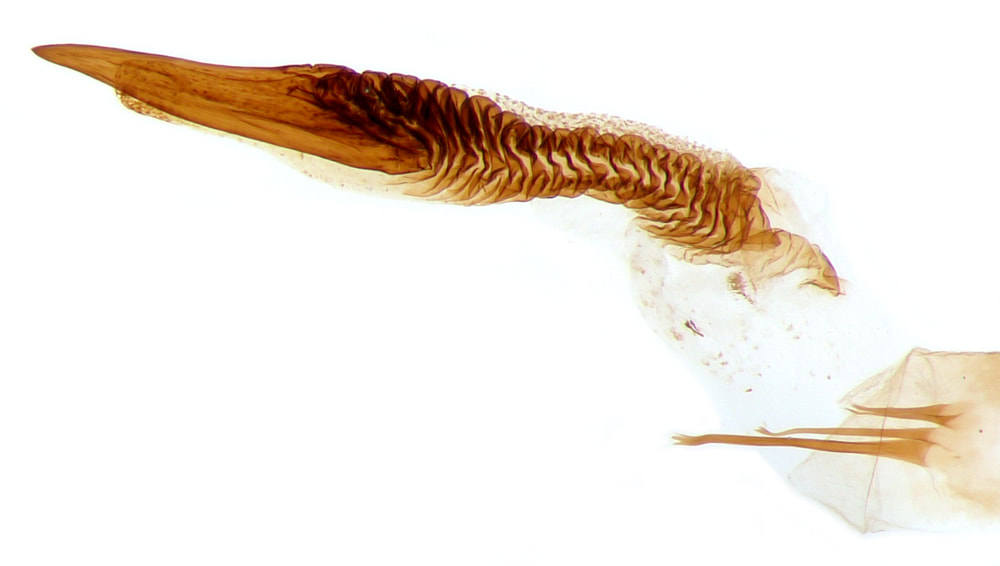
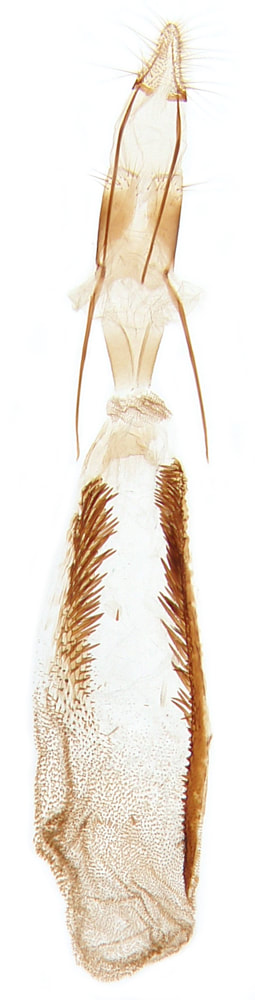
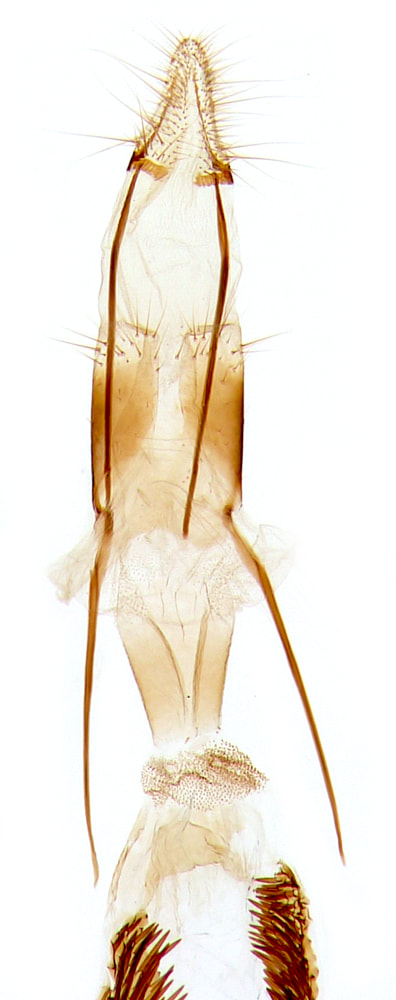
Male genitalia: In the aedeagus both Delplanqueia species have a large cornutus at the apex of a long band of rugose sclerotisation. In D.dilutella this cornutus is relatively short and it narrows fairly evenly from base to apex; in D.inscriptella the cornutus is relatively long and it narrows fairly abruptly at ¼ from the base so that the apical ¾ is noticeably narrower. It is difficult to get a definite absolute measure from images at Moth Dissection due to differences in the preparations and judgement of the exact position of the base of the cornutus; but the ratio of length of the cornutus / width of the cornutus at its base in these images is ~3.5–4 for D.dilutella and ~5–5.5 for D.inscriptella. (This ratio is 4.2 for §2).
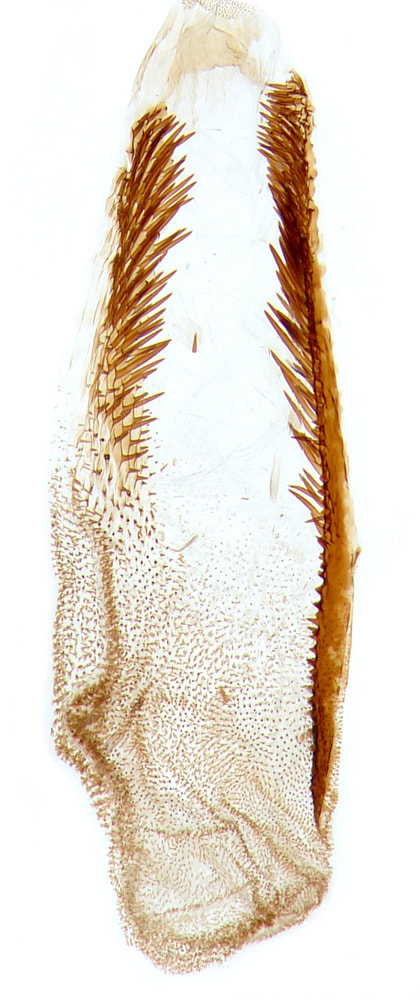
Female genitalia: In the corpus bursae there are two densely spined linear signa running parallel with each other, both with their posterior end near the junction with the ductus bursae. The right signum is longer than the left in both species. In D.inscriptella the longer signum ends anteriorly in a triangular plate; in D.dilutella this plate is missing. In D.inscriptella the shorter signum is relatively long; the ratio length of shorter signum / length of longer signum is ~0.55 (just over half) for D.dilutella and 0.65-0.7 (about ⅔) for D.inscriptella. (This ratio is 0.55 for §3)
D.inscriptella has recently been split from D.dilutella. According to Norfolk Moths, it has a brown (rather than grey) ground colour and lacks the white subbasal fascia shown by D.dilutella. Apparently most Norfolk and Dorset individuals are now thought to be D.inscriptella. Genital images are shown at Moth Dissection.
Male genitalia: In the aedeagus both Delplanqueia species have a large cornutus at the apex of a long band of rugose sclerotisation. In D.dilutella this cornutus is relatively short and it narrows fairly evenly from base to apex; in D.inscriptella the cornutus is relatively long and it narrows fairly abruptly at ¼ from the base so that the apical ¾ is noticeably narrower. It is difficult to get a definite absolute measure from images at Moth Dissection due to differences in the preparations and judgement of the exact position of the base of the cornutus; but the ratio of length of the cornutus / width of the cornutus at its base in these images is ~3.5–4 for D.dilutella and ~5–5.5 for D.inscriptella. (This ratio is 4.2 for §2).
Female genitalia: In the corpus bursae there are two densely spined linear signa running parallel with each other, both with their posterior end near the junction with the ductus bursae. The right signum is longer than the left in both species. In D.inscriptella the longer signum ends anteriorly in a triangular plate; in D.dilutella this plate is missing. In D.inscriptella the shorter signum is relatively long; the ratio length of shorter signum / length of longer signum is ~0.55 (just over half) for D.dilutella and 0.65-0.7 (about ⅔) for D.inscriptella. (This ratio is 0.55 for §3)

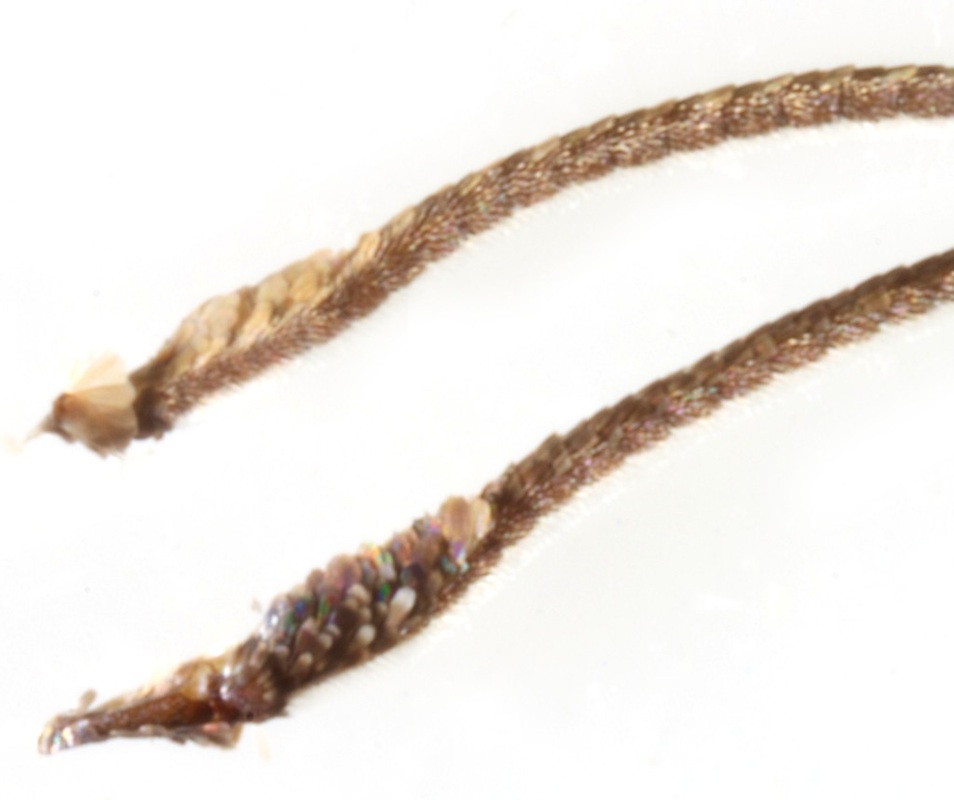
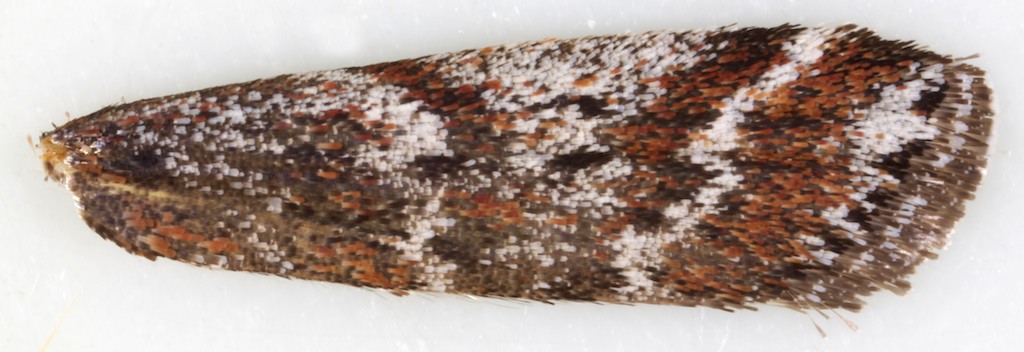
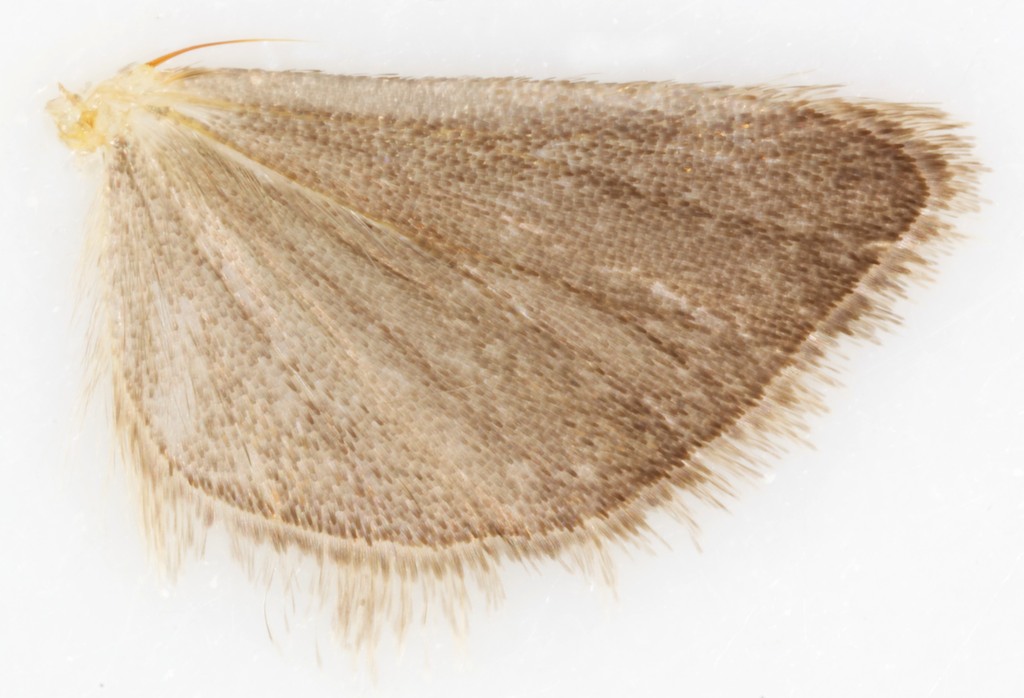
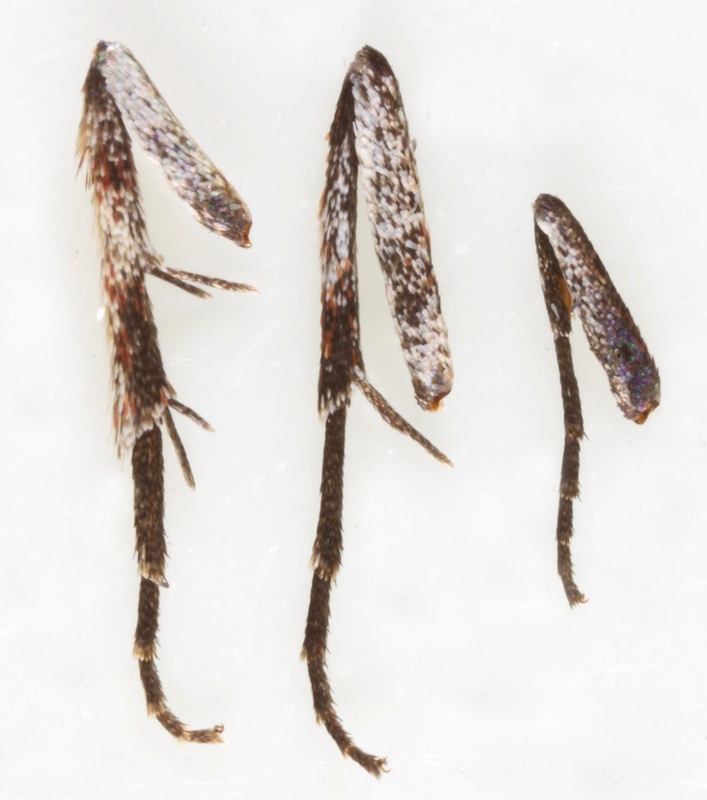
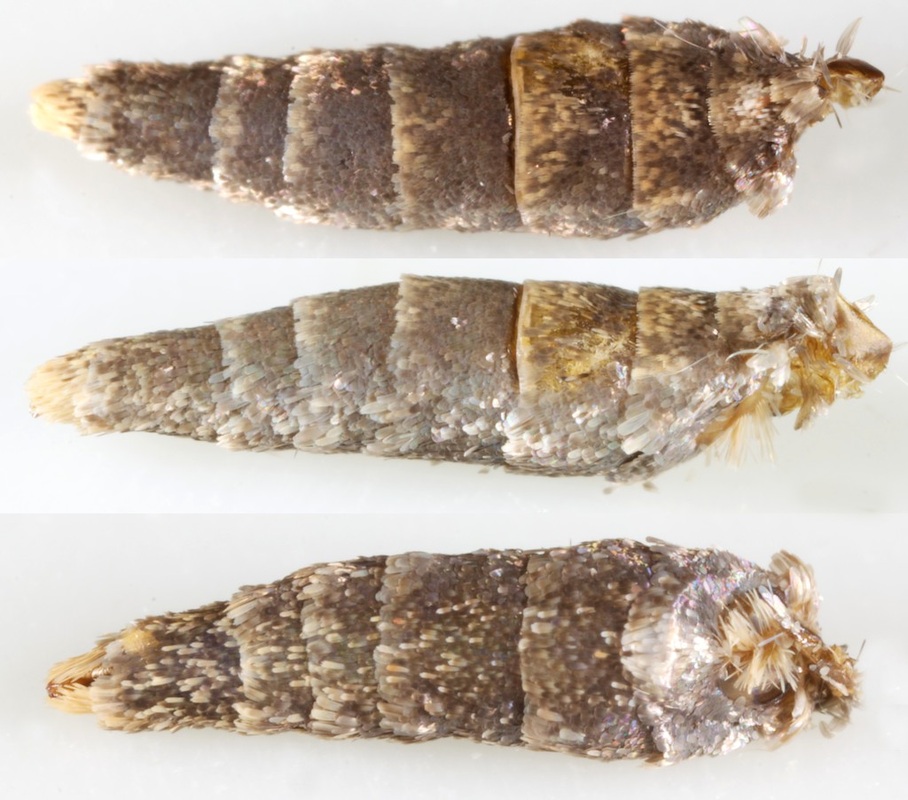
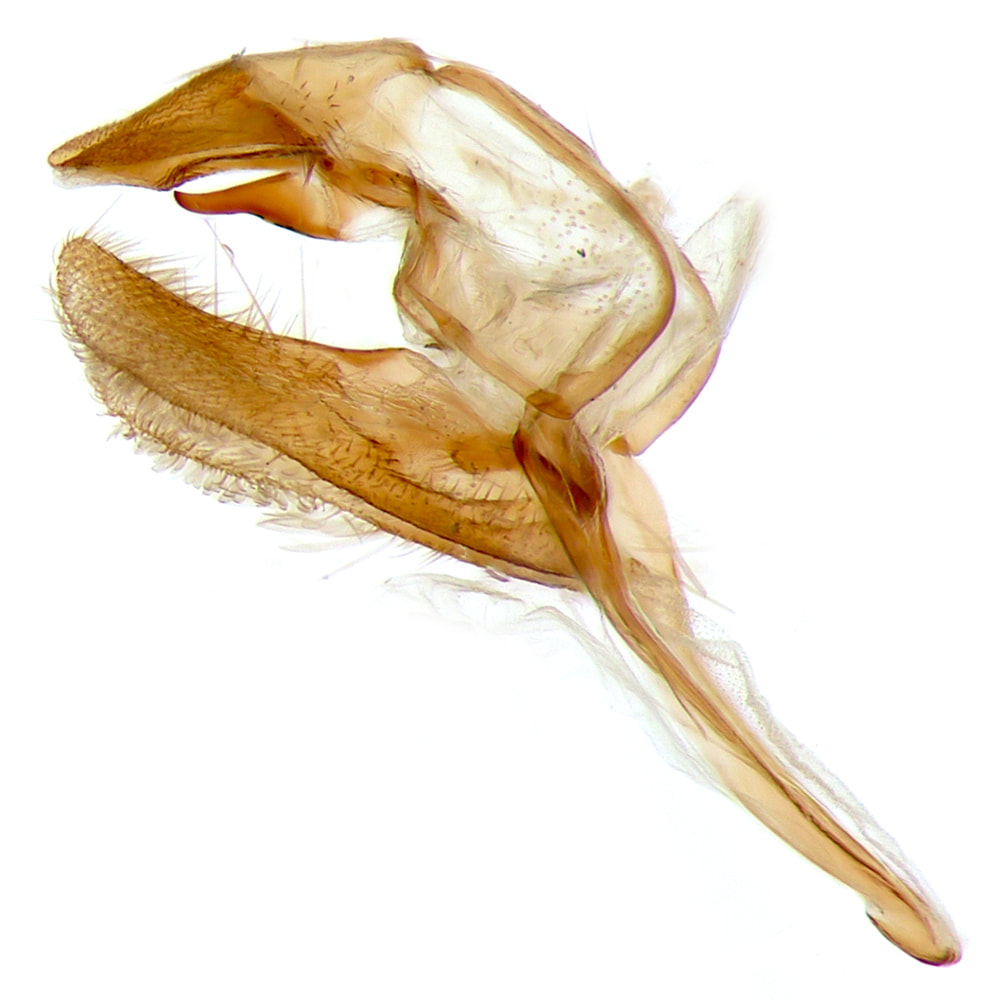
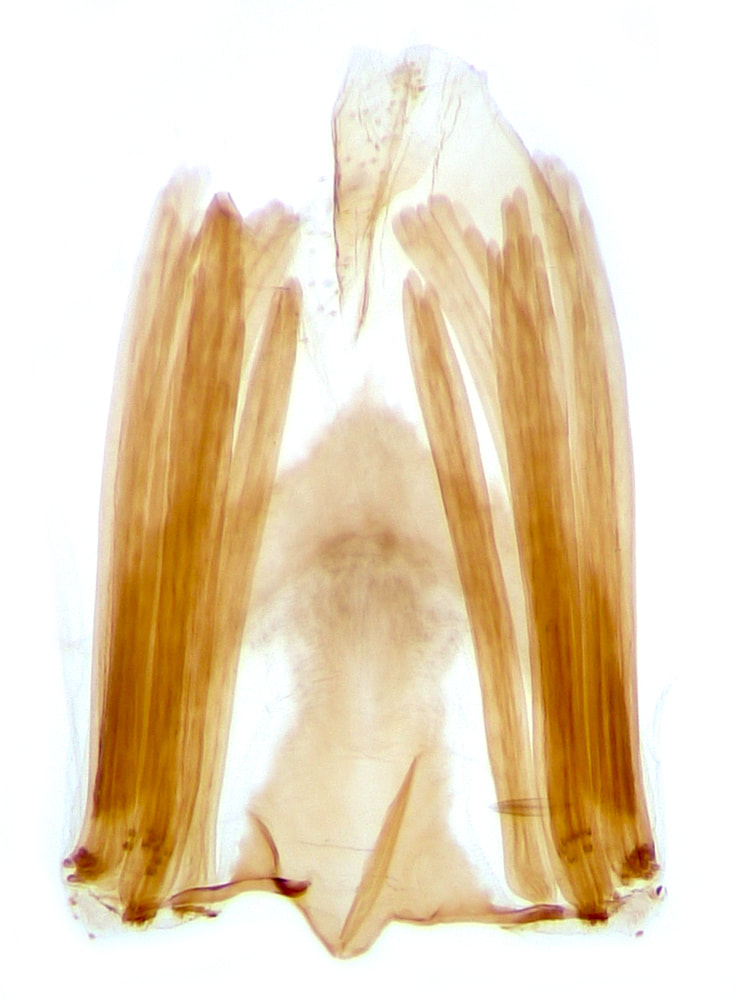
§1 Mull; 30/06/2011; male; fw 9.9mm
§2 Perranporth Dunes, Cornwall; male; specimen provided by Tony Wilson
§3 Perranporth Dunes, Cornwall; female; specimen provided by Tony Wilson
All images © Chris Lewis
§2 Perranporth Dunes, Cornwall; male; specimen provided by Tony Wilson
§3 Perranporth Dunes, Cornwall; female; specimen provided by Tony Wilson
All images © Chris Lewis
Page published 23/03/2012 (§1) | Genus changed from Pempeliella 14/03/2014 | §2&3 added 08/08/2023
